Organizing Your Closet: A Room-by-Room Approach
Learn how to sort, fold, and arrange clothes so you can actually find what you're wearing.
Stop digging through cabinets. Here's how to organize your kitchen storage so everything has its place and you can find it quickly.

Kitchen cabinets are where things go to disappear. You know what I mean — that stack of mismatched containers, spices you forgot you owned, random gadgets shoved in the back. It's frustrating because you're not actually short on space. You're just not using it right.
The good news? Organization doesn't require expensive systems or a weekend renovation. We're talking about practical adjustments that work with your existing cabinets. Simple strategies that make a real difference in how quickly you find what you need and how much you can actually fit.
Here's what we'll cover: understanding your cabinet space, sorting what you actually use, arranging things logically, and maintaining the system so it doesn't collapse into chaos again after two weeks.
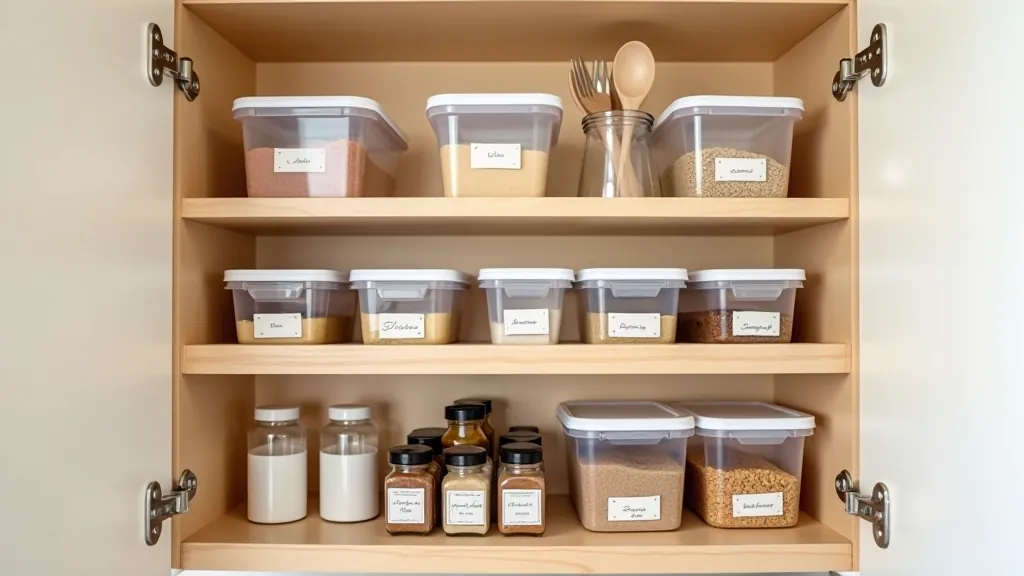
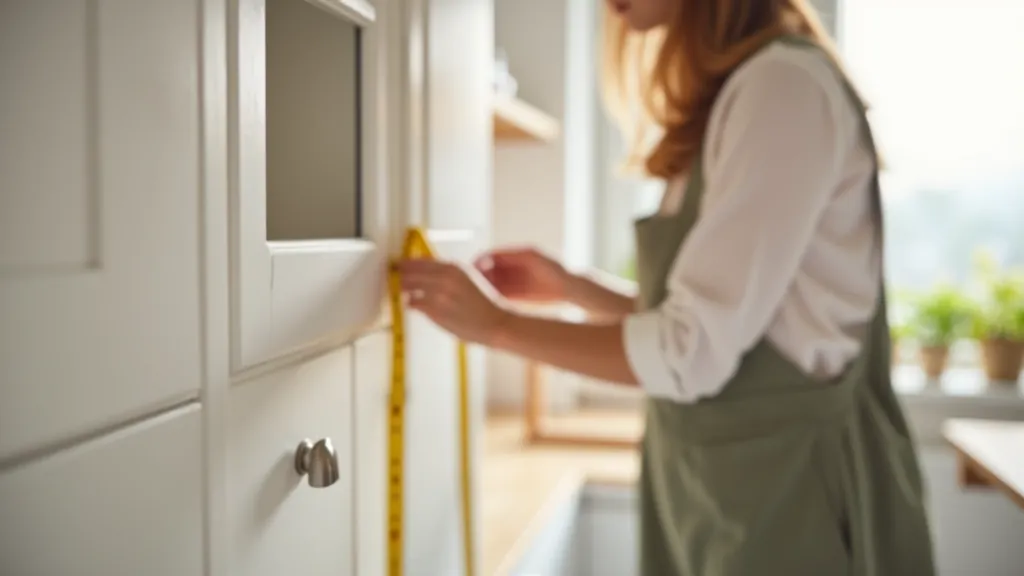
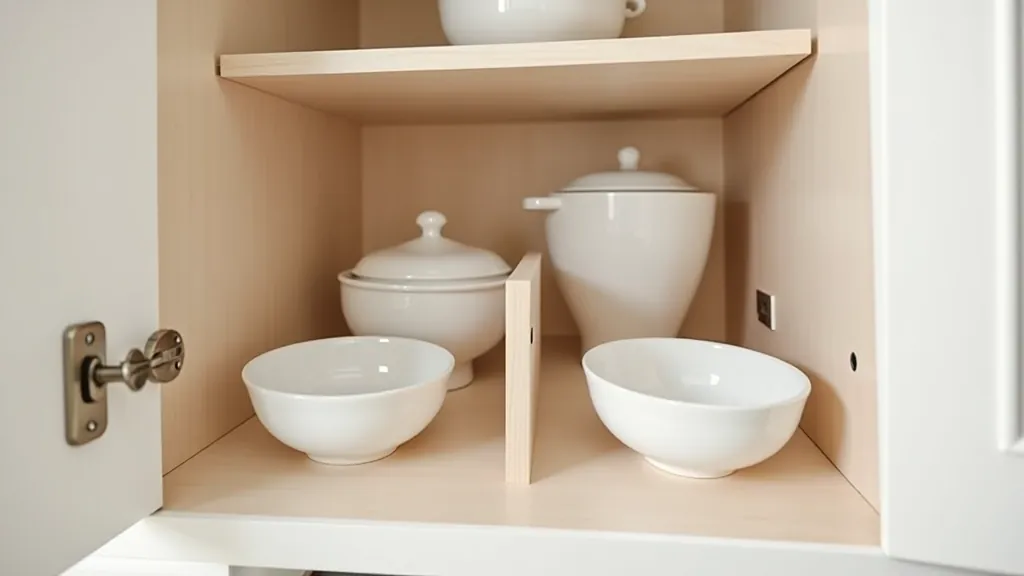
Before you move a single item, you need to understand your actual space. Open every cabinet. Look at the dimensions — height between shelves, depth, width. You'll probably discover dead space you've never used effectively. That gap between shelves? Perfect for stackable containers. That deep shelf where things disappear? Needs dividers or tiered risers so you can actually see what's there.
Count your cabinets. Most kitchens have 6-12 base cabinets and 5-10 wall cabinets, but don't assume anything. Each one has different potential depending on its location and accessibility. Upper cabinets are fine for things you use occasionally. Lower cabinets should store items you grab weekly. The cabinet right next to your cooking area? That's prime real estate for everyday essentials.
Quick assessment: Most kitchen cabinets are only 60-70% efficiently used. You're probably not lacking storage — you're lacking organization.
You can't organize clutter. You have to get rid of it first. Pull everything out of your cabinets and sort into categories: things you use regularly, things you use occasionally (maybe 3-4 times a year), and things you don't use anymore.
Be honest about this. That fancy serving platter you haven't used in three years? It's taking up valuable space. The duplicate measuring cups? Keep one set, donate the rest. You're aiming to keep only what actually fits your life. Most people find they can reduce their kitchen items by 20-30% without losing anything they truly need.
Kitchen organization follows one principle: place items where you use them. Things you grab while cooking should be near the stove. Items for meal prep belong near the sink and cutting area. This isn't complicated, but it does require thinking about your actual workflow.
Most kitchens naturally organize into zones. The cooking zone (pots, pans, oil, spices). The prep zone (cutting boards, knives, mixing bowls). The dining zone (everyday dishes, glasses, napkins). The baking zone (flour, sugar, measuring tools). Keep each zone together. You'll find yourself reaching for things that are actually where you expect them to be.
Within each zone, arrange by frequency. Items you use daily go at eye level or at easy reach. Weekly items go slightly higher or deeper. Monthly items can go to less accessible spots. This simple system means you're not constantly hunting through cabinets for the same things.
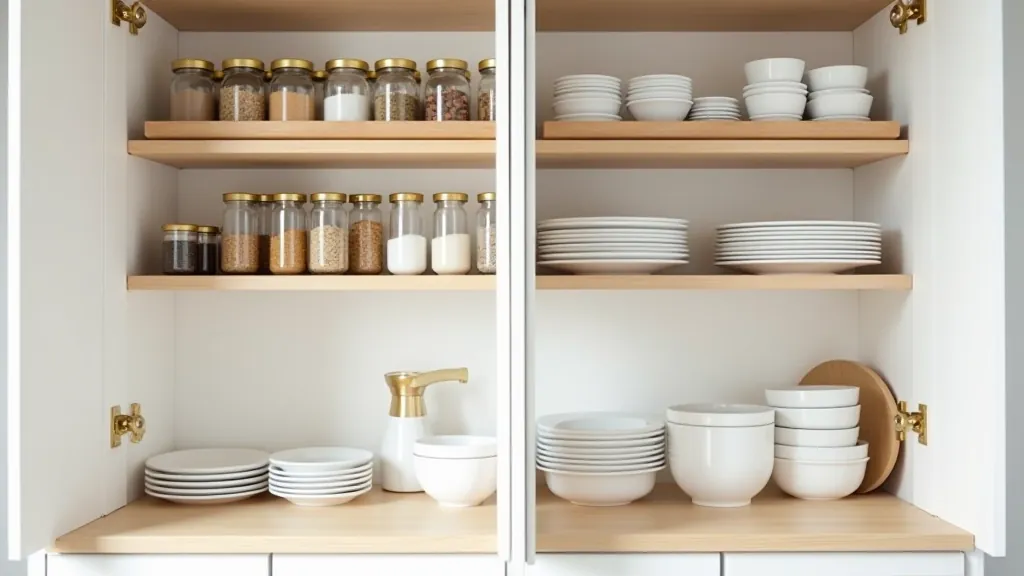
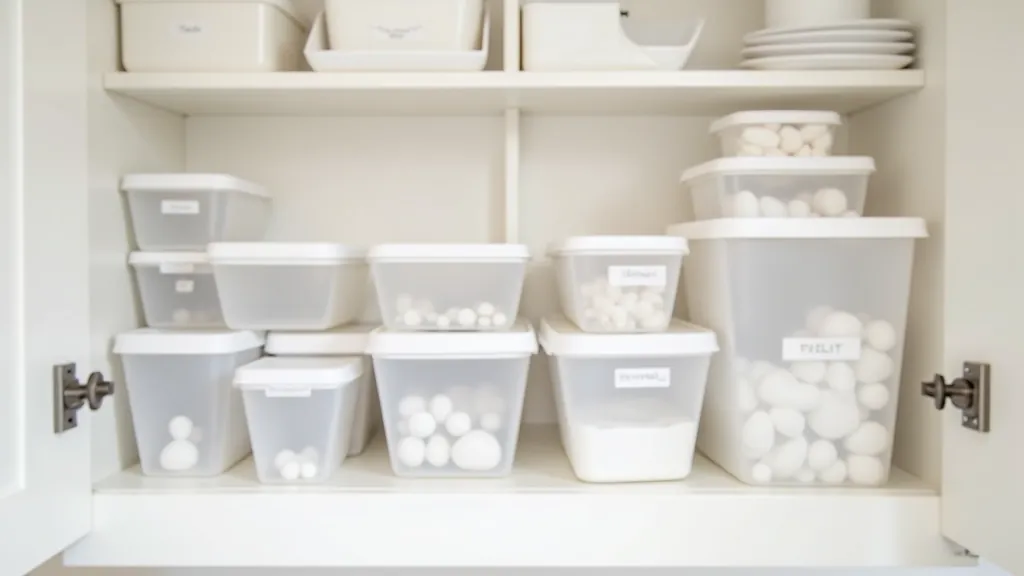
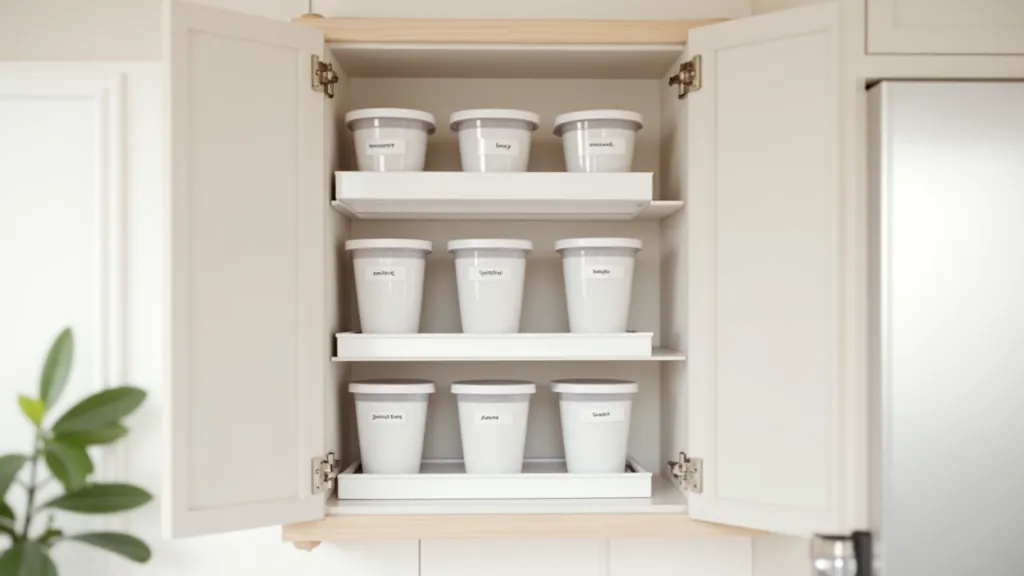
You don't need expensive systems. You need practical tools that maximize your existing space. Tiered shelf risers are game-changers — they let you stack plates vertically instead of creating a tower that's impossible to access. A simple riser gives you 30-40% more storage in the same footprint.
Clear containers are essential for dry goods. You can see what you have without opening every container. Label everything — it takes 30 seconds and prevents the "what is this exactly?" moment. Dividers for cabinet drawers keep utensils from becoming a tangled mess. Pull-out baskets in lower cabinets let you access items in the back without removing everything in front.
Pro tip: You don't need matching containers. Mismatched containers work fine as long as they're clear so you can see the contents. Save money, use what you have.
Organization fails because people treat it as a one-time project. You organize the cabinets, and two weeks later they're chaos again. The solution is maintenance, not perfection. Spend 10 minutes every week putting things back where they belong. That's it.
When you bring home groceries, put things in their zones immediately. Don't just shove items in the nearest cabinet. It takes 30 seconds longer but prevents the slow slide back into disorganization. Once a month, do a quick check: move expired items, wipe down shelves, adjust anything that's shifted. This prevents the system from degrading over time.
And here's something that actually works — when you remove something from the cabinet, check if you need it. That spice you haven't used in 18 months? Donate it. That duplicate gadget? Give it away. Small regular purges keep your cabinets manageable and prevent accumulation of things you don't actually use.

Organized cabinets aren't about aesthetics, though they do look better. They're about reclaiming time. You're not hunting for that one container or wondering if you already bought garlic powder. You open a cabinet and know exactly what's there and where it is. Cooking becomes faster. Meal prep becomes simpler. You actually enjoy your kitchen instead of feeling frustrated by it.
Most of this requires zero money and minimal effort. You're just being intentional about how you use the space you already have. Sort what you need to keep. Arrange it logically. Maintain it weekly. That's the system that works, and it's the same system that's worked in kitchens for decades.
This article provides general information about kitchen cabinet organization and storage solutions. Individual circumstances vary based on cabinet size, kitchen layout, and personal storage needs. The suggestions offered are educational and informational in nature. For assistance with custom storage solutions or significant kitchen modifications, consult with a professional organizer or contractor. Results depend on consistent implementation and maintenance of the organization system.